

American Elm Tree Facts
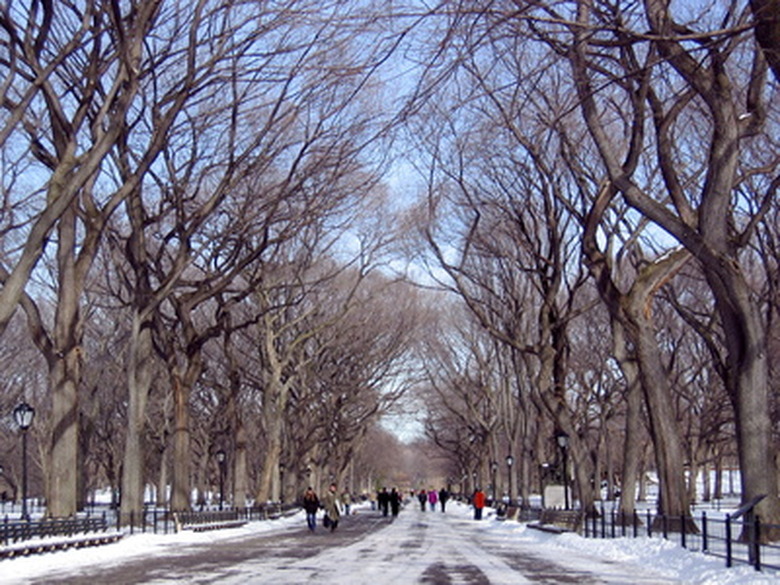
The American elm tree is a large growing shade tree previously used along city streets and in home landscapes. In the early 1900s, Dutch elm disease caused a destruction of the tree throughout North America, making it no longer a viable landscape option. American elm trees are native to the United States and hardy in USDA growing zones 2 through 9.
Characteristics
The American elm is a tall growing, deciduous tree that reaches a height up to 100 feet with a spread of 70 feet. The branches grow off the trunk of the tree in tall arches to form a vase-like crown with many branches. American elm trees produce dark green colored leaves that turn gold, light green or brown in the fall.
Planting Requirements
American elm trees grow best in a neutral pH soil that is nutrient rich and well-draining. Sandy loam or clay loam soils work well for the tree. The location should receive full sunlight to partial shade and good air circulation as the tree is susceptible to fungal diseases. Test the soil at planting time to verify it is 6.8 to 7.2 pH. Work ground rock sulfur into the soil to lower the pH or limestone to increase the pH number.
- The American elm tree is a large growing shade tree previously used along city streets and in home landscapes.
- The American elm is a tall growing, deciduous tree that reaches a height up to 100 feet with a spread of 70 feet.
Care
The American elm is a tall tree with a long root system that expands past the drip line. Supplemental water applications benefit the tree during periods of drought. Provide water by soaking the ground just past the tips of the lower branches to a depth of at least 10 inches. Prune elm trees once every three years during the dormant season. Remove dead, damaged and crossing branches. Always disinfect pruning tools with isopropyl alcohol prior to using on elm trees to prevent the introduction or spread of Dutch elm disease.
Dutch Elm Disease
Dutch elm disease is a fungus that spreads by elm bark beetles. The fungus infects the water conducting vessels and tissue, which causes wilted and curled leaves on one or more upper branches. The leaves eventually turn yellow and the entire branch dies. Dutch elm disease destroyed many American elm trees in the mid to late 1900s, making it no longer a desirable landscape specimen. Infected trees require immediate removal to prevent spreading the disease to other elm trees.
- The American elm is a tall tree with a long root system that expands past the drip line.
- Infected trees require immediate removal to prevent spreading the disease to other elm trees.
Problems
American elm trees are susceptible to many fungus and bacterial diseases such as Phloem necrosis, root rot and canker. Phloem necrosis is a virus that attacks the phloem tissue and prevents nutrient flow in the tree. Symptoms of Phloem necrosis are loose bark, wilted leaves and leaf loss. Root rot is a fungus that multiplies and enters the root system when the soil remains saturated for a long period. The fungus blocks water and nutrient flow to cause wilted leaves and branches and eventually death. Canker is a fungus that creates a large, wart-like growth at the base of the trunk and/or branches. The disease cuts off nutrient flow through the tree and causes death. There is no treatment for these diseases. Infected trees require removing and disposing of the wood.
- American elm trees are susceptible to many fungus and bacterial diseases such as Phloem necrosis, root rot and canker.
- The disease cuts off nutrient flow through the tree and causes death.