

Problems With Clay Soil
Clay soils are heavy and do not drain well. They can be the death of some plants, such as citrus trees, which require good drainage. The opposite of heavy clay soil is sandy soil, but simply adding sand to your clay soil doesn't solve the problem. Clay particles are the smallest, finest particles in soil. To be considered clay, a soil normally has 50 percent clay particles.
Poor Drainage
Clay soil has the worst drainage of all types of soil. Because many plants require good drainage in their planting area, check the texture of your soil before you plant anything: grab a handful of moist soil and rub it with your fingers. If it feels gritty or rough, chances are it's sandy soil. If it feels sticky, almost like plastic, it's likely clay. Clay soil will also form a lump that you will have trouble crumbling after you squeeze it into a ball. Adding organic materials such as compost will help give clay soil better drainage and will also provide nutrients to your plants. To be on the safe side, choose plants that don't mind clay soil. Some of these include apple trees, lilacs, honeysuckle, aspens, elms, hawthorn and willow trees.
- Clay soils are heavy and do not drain well.
- To be considered clay, a soil normally has 50 percent clay particles.
Slower to Warm Up in Spring
In areas that receive snow, spring can cause a clay soil to become waterlogged when the snow melts. Because clay soil is heavy, and the weather is still fairly cool, this type of soil warms up more slowly than humus or sandy soil, making it difficult to start spring vegetable plants that need a warmer soil in order to grow quickly into a strong plant.
Compaction and Alkalinity
If you live in a relatively new home, your soil might be heavy clay that earth-moving equipment such as bulldozers and backhoes have compacted. When soil is disturbed, clay can also rise closer to the surface. Often, a thin layer of topsoil is added after the heavy equipment has departed, which solves nothing and actually hides the problem of the heavy clay soil underneath.
Test your soil with an inexpensive soil-testing kit to determine whether it is acidic or alkaline. An alkaline soil is one with a higher pH–over 6.0 is considered alkaline. Plants such as tomatoes and azaleas need acidic soil, so correct the alkaline condition by adding sulfur to your planting area well in advance of putting your plants in–sometimes soil can take up to one year to readjust to a more acidic state after you add sulfur or an acid-based fertilizer.
- In areas that receive snow, spring can cause a clay soil to become waterlogged when the snow melts.
- Plants such as tomatoes and azaleas need acidic soil, so correct the alkaline condition by adding sulfur to your planting area well in advance of putting your plants in–sometimes soil can take up to one year to readjust to a more acidic state after you add sulfur or an acid-based fertilizer.
Hard to Work With
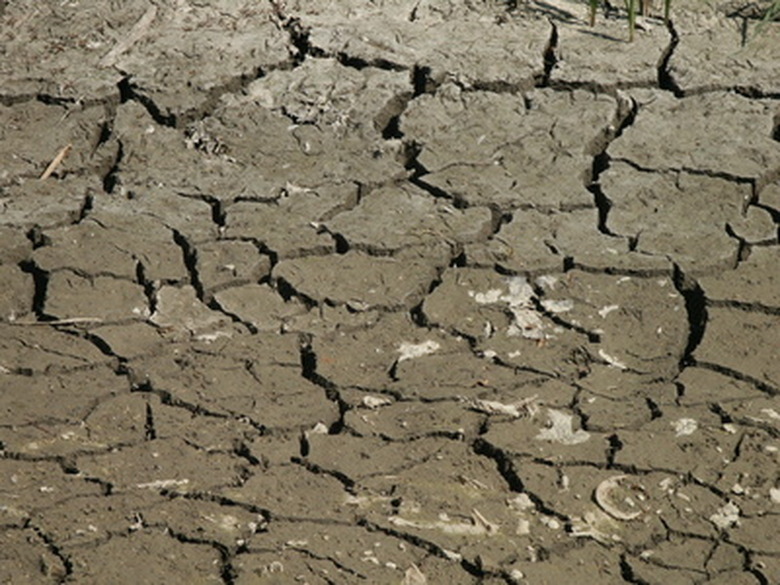
Clay soil is heavy. You'll know you have clay soil when you try digging a garden bed and find that your back and knees become tired after a short period of digging. Clay soil stays wet for a long time, which makes it heavier than sandy or loamy soils. When clay soil dries out, it can crack and seem as hard as cement. This situation makes it hard for plants' roots to penetrate the soil and makes it nearly impossible for seeds to send their sprouts to the surface.
Add builder's sand, gypsum and compost to help the heaviness, but avoid adding peat moss or composted manure. Some cities have yard-waste recycling programs–your city might offer compost to residents either free or for a reasonable price.
- You'll know you have clay soil when you try digging a garden bed and find that your back and knees become tired after a short period of digging.
- Add builder's sand, gypsum and compost to help the heaviness, but avoid adding peat moss or composted manure.