

A Guide To Different Types Of White Daisies
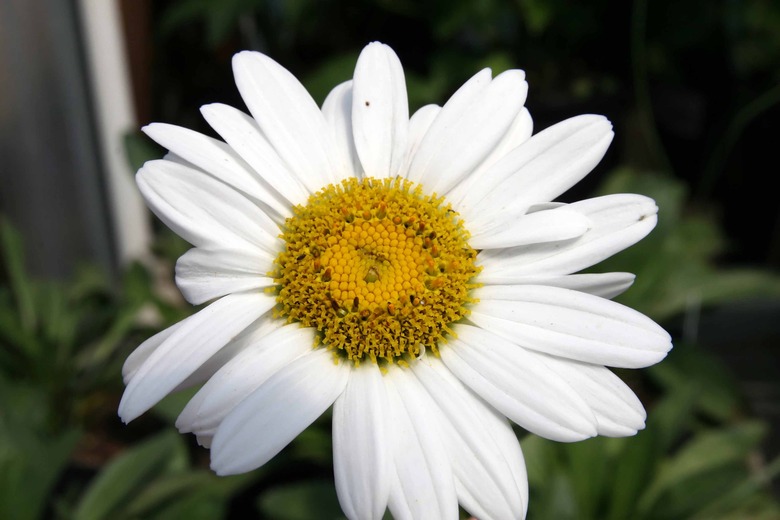
Daisies are flowering plants in the Aster family. Daisy blooms consist of rays, which are individual flowers that look like petals, that surround a center disk featuring many densely packed small flowers.
There are both species of daisies and cultivars that have white rays.
 David J. Stang
White Shasta Daisies
The shasta daisy (Leucanthemum x superbum, zones 5 to 9) is a hybrid variety of daisy that features white rays around a yellow center. This type of daisy is named after Mt. Shasta in California, where it was developed in the late 19th century.
There are a variety of Shasta daisies that differ in size and flower form. The 'Becky' cultivar is one of the larger cultivars, with heights between 3 and 4 feet and flowers that are 3 to 4 inches wide.
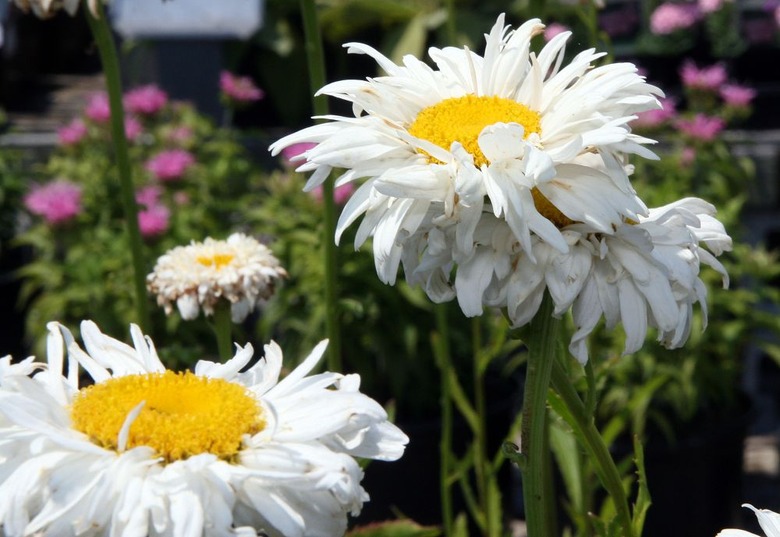
The 'Belgian Lace' shasta daisy cultivar has a large center and can be identified by its frilly rays. 'Crazy Daisy,' another shasta daisy cultivar with frilly rays, has large double flowers and more than one flower on each stem. This cultivar makes a great cut flower for bouquets and floral arrangements.
 阿橋
阿橋
White Gerbera Daisies
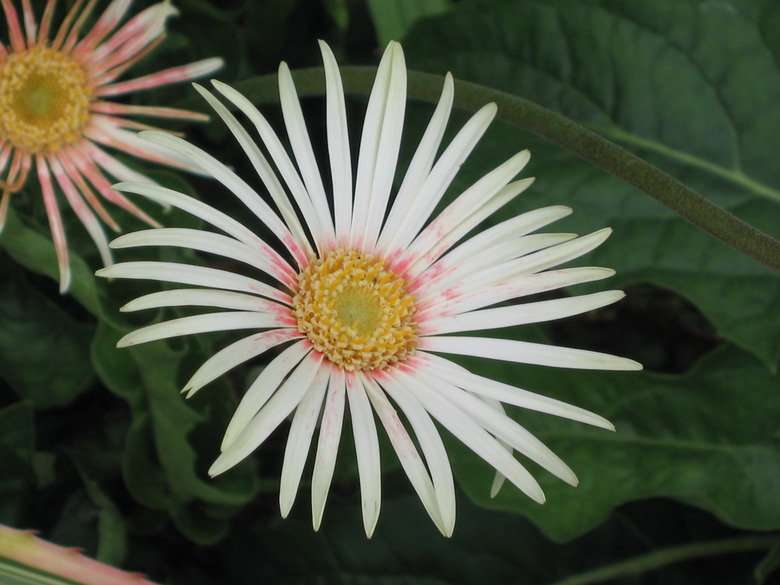
Gerbera daisies (Gerbera jamesonii, zones 8 to 10), also known as Transvaal daisies, are a variety of daisy native to Transvall, South Africa. The rays of these species are usually red, yellow and orange. However, hybridization has produced white cultivars. The centers of gerbera daisies are a bronzy-yellow hue.
Tip
While species gerbera plants are usually colorful, there are white cultivars on the market.
Gerbera daisies may be 6 to 18 inches tall. The flowers are large and have diameters of 3 to 4 inches.
While gerbera daisies are perennials, outside of their hardiness zone, they are often grown as annuals. Alternatively, they can be grown in containers and overwintered indoors in cooler climates.
Other Types of White Daisies
Several European species of daisy have white flowers, though some of these species have become invasive in the U.S. and are not recommended for planting in the landscape.
 m.dolores paderne sanchez
English Daisy
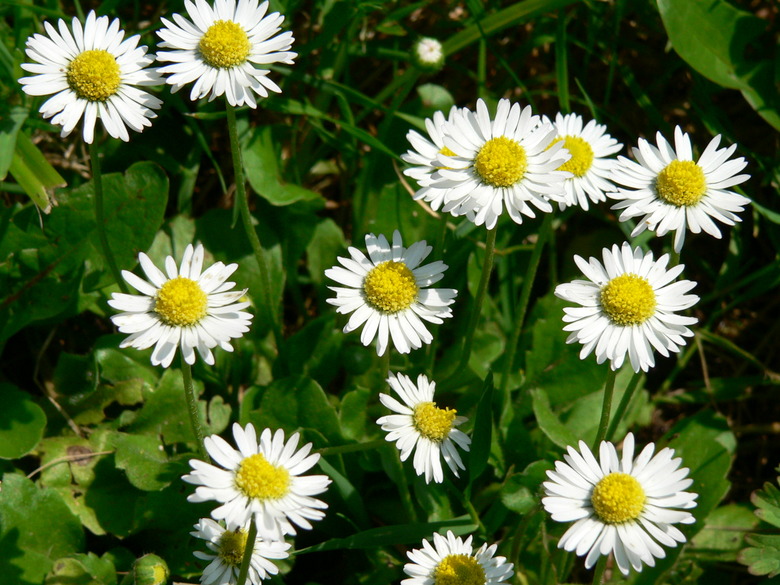
The English daisy (Bellis perennis, zones 4 to 8) is a species of white daisy native to Europe that has naturalized in parts of northern and western North America. These plants are about half a foot tall, while the flowers have a diameter of about 2 inches. This plant is considered weedy because it spreads quickly through seeding and crowns that spread.
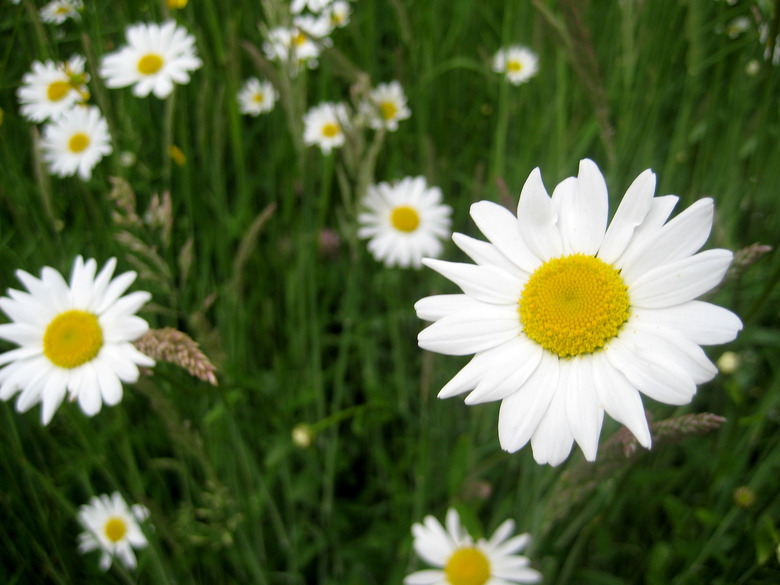 Lupus in Saxonia
Oxeye Daisy
The oxeye daisy (Leucanthemum vulgare, zones 3 to 8) is another white daisy flower native to Europe that has also naturalized in many parts of North America. It has white rays around a yellow, flat center and can be up to 3 feet tall. Oxeye daisy cultivars such as 'May Queen' are not recommended because they have a tendency to become invasive.
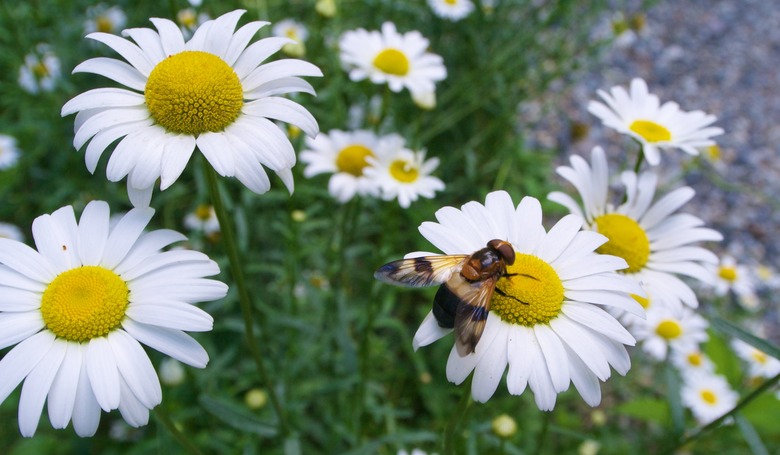 Koichi Oda
Marguerite Daisy
Marguerite daisies (Argyranthemum frutescens, zones 10 to 11) are white daisies native to Spain's Canary Islands. They are also known as cobbitty daisies and Paris daisies. This species is not known to be invasive.
These plants have a bushy growth habit and heights between 2 and 3 feet. The white flowers with yellow centers are about 2 1/2 inches wide. This species has dark green leaves that are deeply dissected.
References
- Missouri Botanical Garden: Leucanthemum × superbum
- Missouri Botanical Garden: Leucanthemum × superbum 'Becky'
- Missouri Botanical Garden: Leucanthemum vulgare 'Maikonigin' MAY QUEEN
- Missouri Botanical Garden: Gerbera jamesonii
- Missouri Botanical Garden: Leucanthemum 'Belgian Lace'
- Missouri Botanical Garden: Bellis perennis
- Missouri Botanical Garden: Argyranthemum frutescens
- Missouri Botanial Garden: Leucanthemum × superbum 'Crazy Daisy'
- Clemson Cooperative Extension: Gerbera Daisy